 review by
If you’d told me there weren’t any rats in Resonance: A Plague Tale Legacy, and that it plays closer to Assassin’s Creed and Tomb Raider than its previous entries, Innocence and Requiem, then I’d have a hard time understanding what makes this a Plague Tale game.
But after solving a plethora of light-based puzzles, creeping past the terrifying monster that lurks within its breathtaking Cretan temples and vistas, and slaughtering more henchmen than any amount of talking therapy could possibly reverse, I now totally get it.
Resonance: A Plague Tale Legacy is Asobo’s finest adventure to date.
Now, before I crack on with the good stuff, it's worth mentioning that you’re not required to have played, or know anything about the other Plague Tale games to enjoy Resonance. It's a totally standalone prequel adventure. In fact, I’d even go as far as suggesting I might have preferred going into this one with a little more mystery.
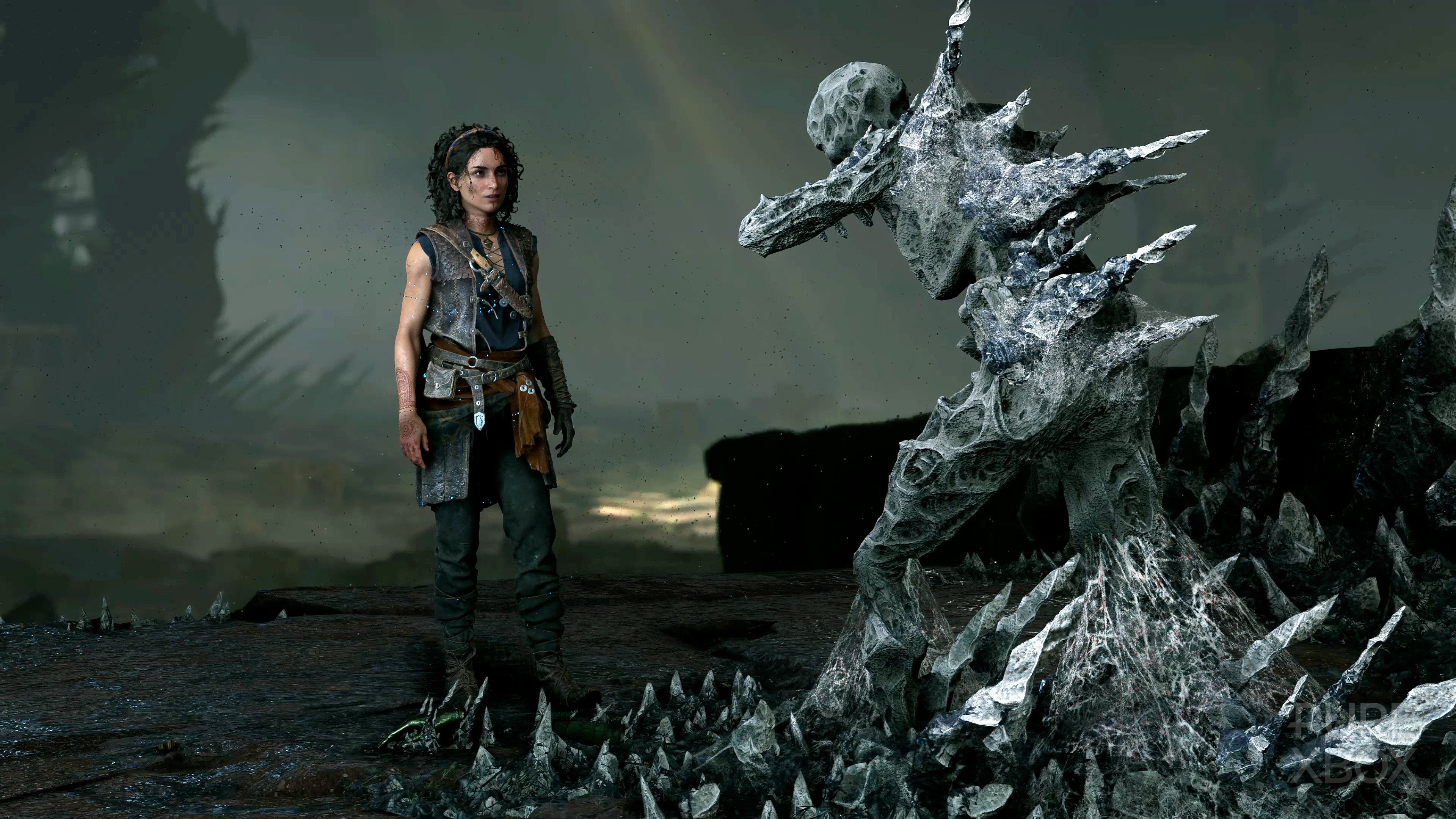
You play as Sophia, a charming bandit haunted by her past. Over the years, she’s experienced visions of ancient warriors and mythical creatures, sketching what she sees in her journal. She’s a scrappy protagonist who's easy on the eyes, as cunning as she is confident, and an absolute tour de force in combat.
The dark and ominous plot stems from Sophia’s journal, which is lined with illustrations of an ancient Minoan civilisation. The drawings lead her bandit dad towards distant shores on an expedition deep into the heart of the Minotaur’s Island, never to return. His disappearance gives Sophia the emotional pep to kick off her own journey, beginning a coming-of-age training montage that transforms her from a wiggle-toothed orphan into the dual-wielding badass we play as for the rest of the game.
I’m not about to spoil anything here, but one thing leads to another, leaving Sophia and her red-headed companion, Leni, in possession of a prized artefact. Pursued on all fronts by soldiers and scoundrels alike, they race to uncover the island’s secrets, hoping to understand who or what has been calling to Sophia all this time.
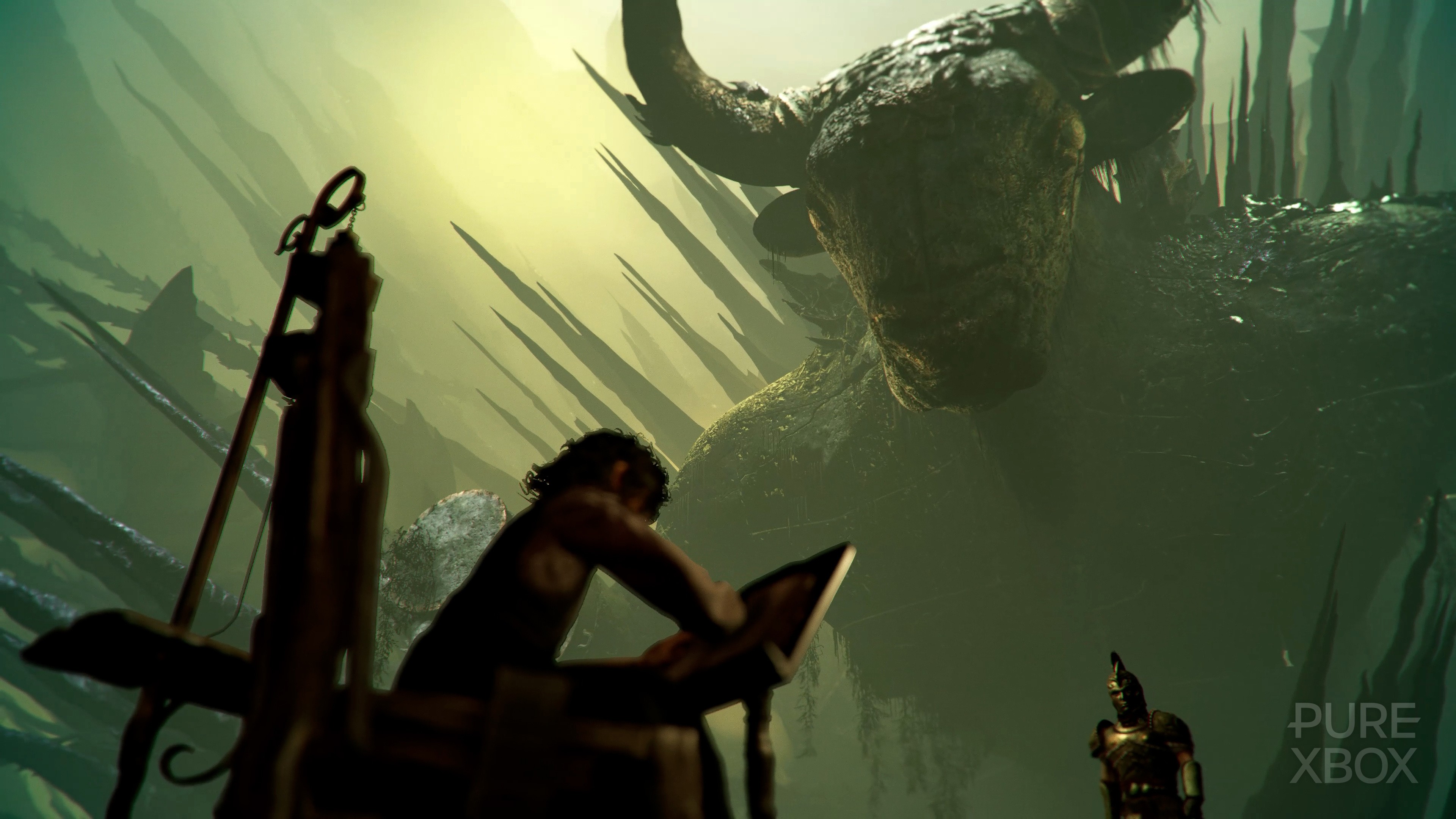
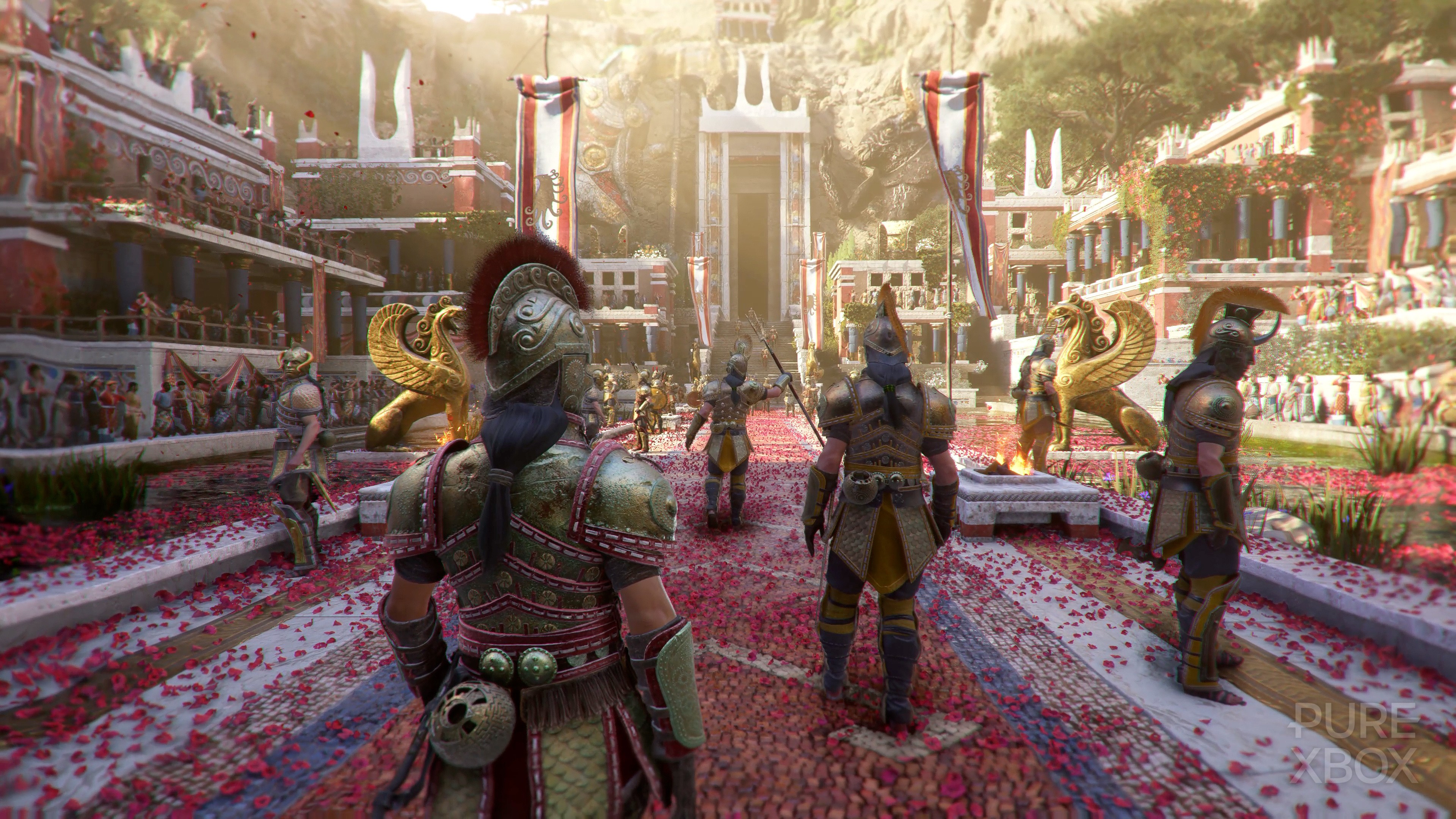
The series’ unsettling and darkly sinister themes effectively weave the Macula plague into well-known Greek mythology from start to finish. As Sophia descends deeper into the island, her connection to the ancient warrior Theseus grows in tandem. Through a number of jaw-dropping flashback sequences, we’re placed into glorious Minoan armour and pitted against other warriors across a deadly series of trials, all in the hope of facing the fabled Minotaur.
At the heart of Resonance are its flashbacks to Theseus, which present a jaw-dropping setting during the height of Minoan culture. The temples are beautiful, adorned with vibrant paints, whilst scattered petals lead the legendary warrior through grand halls and coliseums.
I often found myself wanting to slow down and take it all in. There’s a clever use of time jumps that creates a real sense of tension. Sophia follows in Theseus’ footsteps, navigating what the island once was and what it has become, decrepit and ravaged by time. Even in the rubble, the world Asobo built is absolutely beautiful.
Thankfully, Resonance rarely feels like it’s dragging its feet in the sand. The story moves at a satisfying pace, with puzzles, combat, exploration and stealth taking turns in the spotlight. It isn’t the sort of adventure that’ll leave you looking daft outside a door you’ve spent the past half-hour struggling to open, and I respected that. But the trials won’t pull any punches either, as I quickly discovered jumping in my seat after a sudden, pointy spike trap caught Sophia’s face off guard.
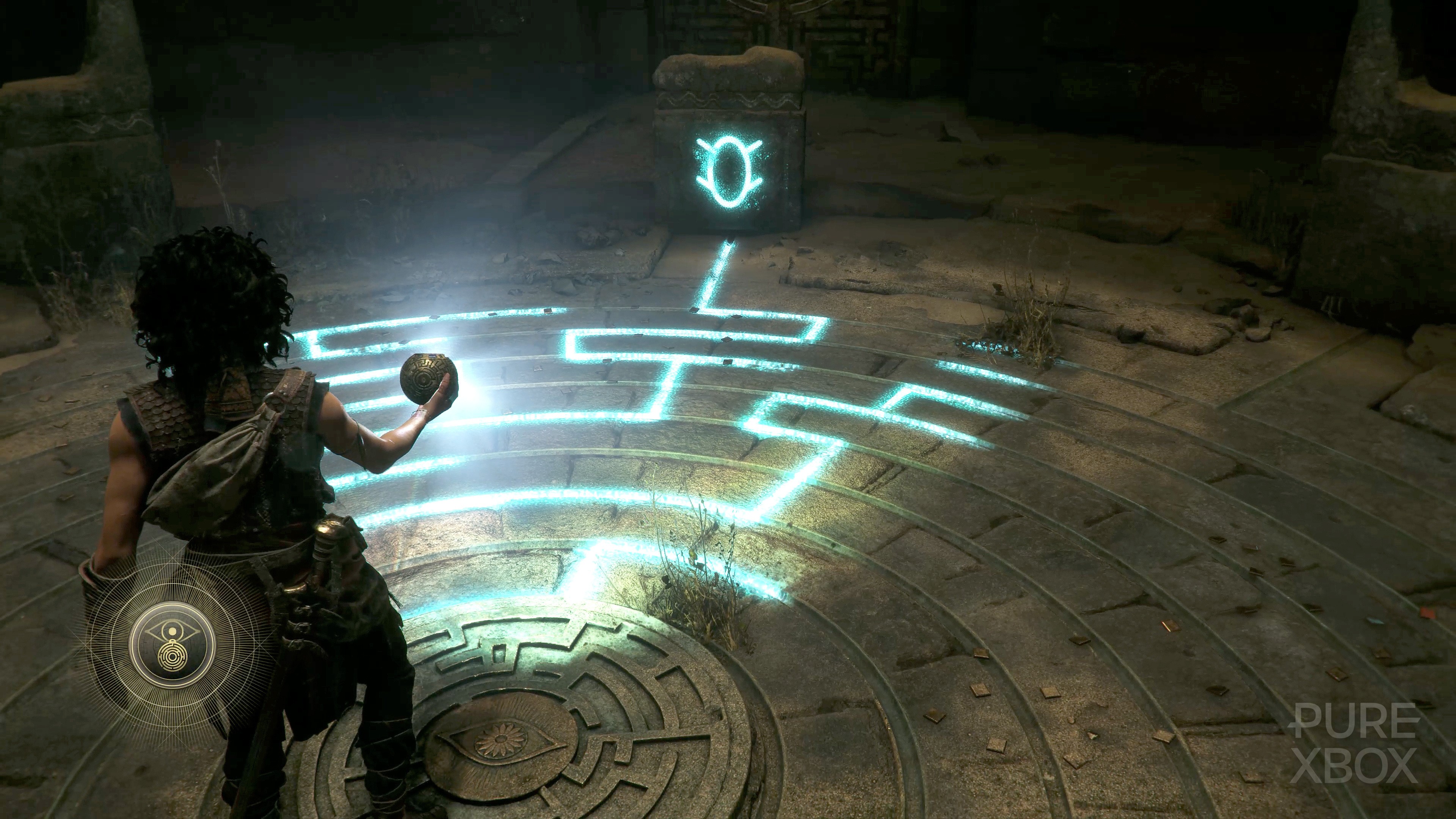
Light remains one of the series’ defining mechanics. For the most part, puzzling in Resonance requires Sophia to seek out light sources and manipulate them using her spherical key thingamobob.
Where light once served mostly to keep rat tsunamis at bay, this time around it’s more useful as a tool to illuminate paths through traps and reflect beams to open doorways and passages. As you progress through the chapters, new trinkets are socketed into the sphere, introducing new abilities like refracting light into three separate colour beams you’ll need to rotate to fit environmental puzzles, helping keep things fresh. It’s all pretty straightforward stuff, but satisfying to engage with nonetheless.
The game just works because it’s interested more in turning you into a spelunking clever clogs than making you feel stupid. Sophia does a lot of memorising for you, jotting down symbols and solutions in her handy journal whenever you need to refer back.
When it comes to combat, this is where the series evolves the most. As I mentioned before, It plays more like Assassin’s Creed than Asobo’s previous entries. Sophia wields a sword and dagger with enough skill to easily dispatch armoured soldiers. I particularly enjoyed the flair with which she guts her foes, silhouetted by the glow of ancient armour.
What she lacks in ranged attacks, she makes up for with a grapnel hook used to yank foes closer, or send them tumbling into the numerous spike pits and ominous holes scattered throughout the dilapidated Minoan ruins. There’s something glorious about dragging an unsuspecting lad towards you before dropkicking him into the void.
Former protagonist Amicia de Rune was ruthless by the end of Requiem, but she always felt like she struggled in a scrap, as though she was scuffling with her hands tied behind her back.
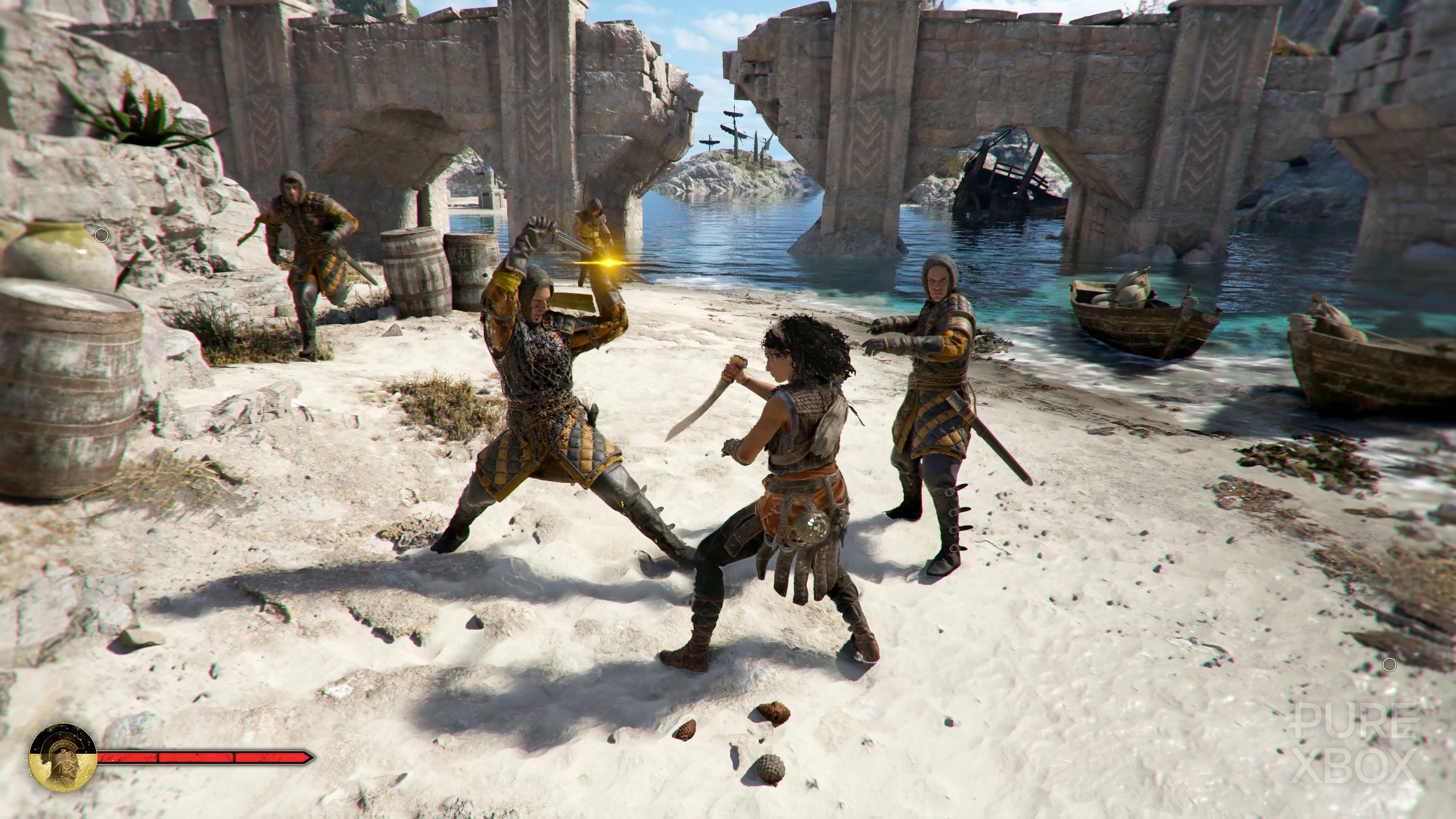
Sophia, on the other hand, grew up as a fighter. This gives combat a greater sense of depth than in previous games. Our bandit girlie is direct, attacking from the front with a range of light and charge heavy strikes.
She can also block with RB and parry with a well-timed press, which can stun her assailant, leaving them open for a quick counter. Some enemies force you to think fast. When the red glint of an archer appears, be ready to dodge and drag them closer with your grapnel, as well as dropkicking shieldbearers off balance, and manoeuvring out the way of unblockable attacks.
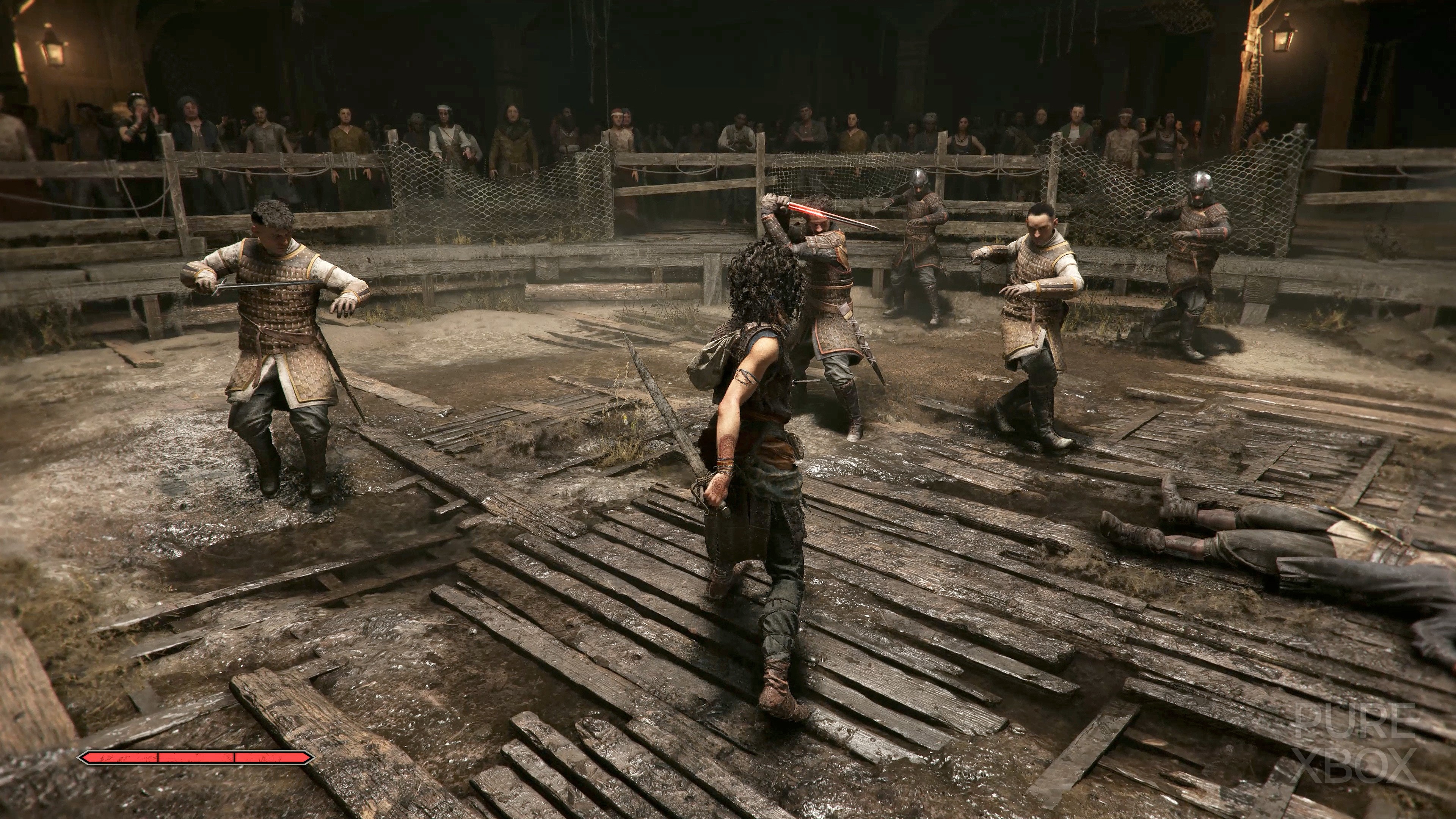
When you’re in control of Theseus, combat feels heftier and more challenging, as you’d expect from a seasoned warrior of legend. Sophia also has the option to collect and swap between swords to switch things up, with each one bringing its own special move. Once you’ve built up your special meter, these can be unleashed in a number of different moves.
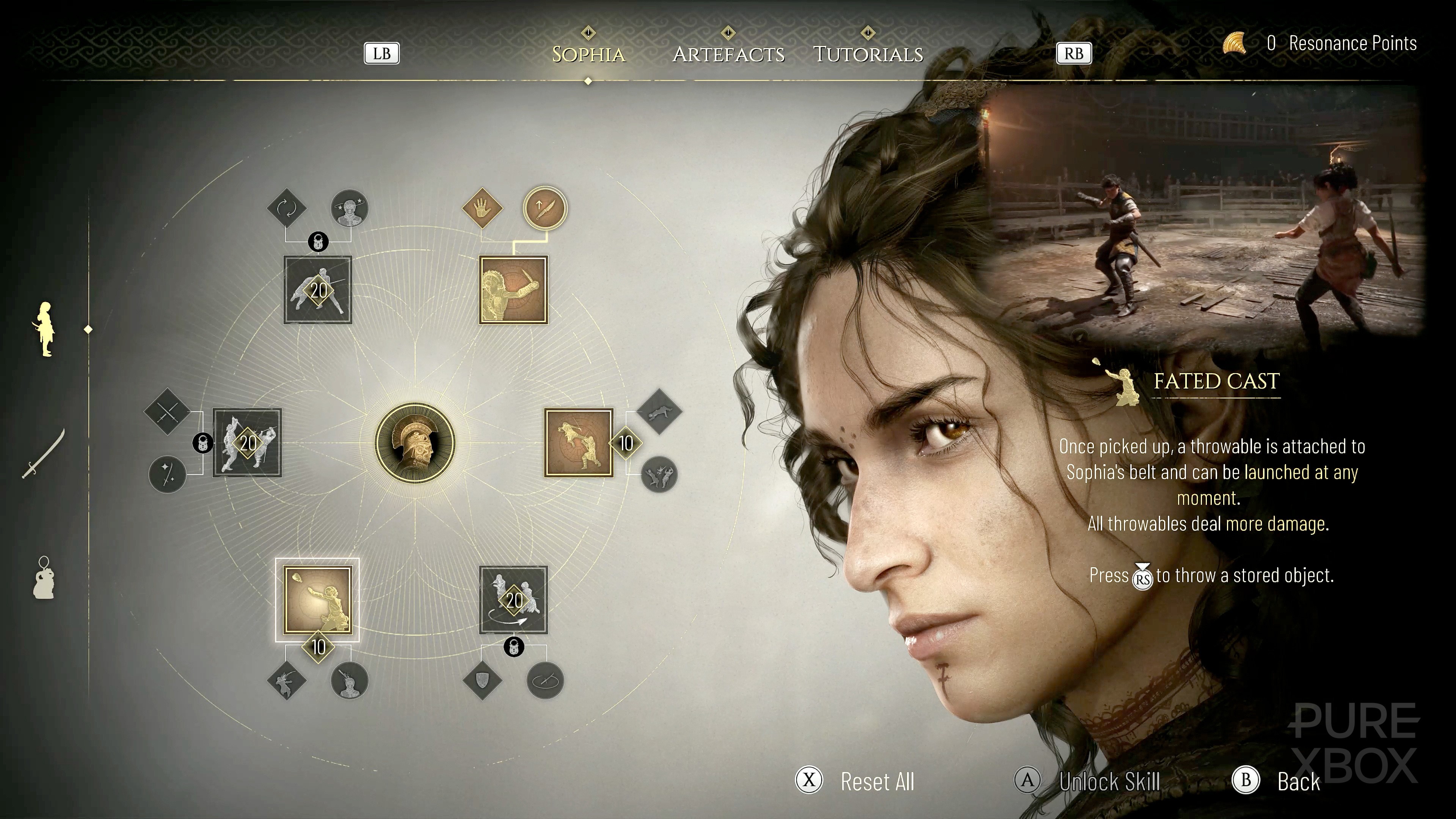
As you unlock new skills, fisticuffs become less about surviving. Instead, you’re encouraged to experiment with different builds, play around with new sword abilities, and get creative with your surroundings.
Stealth is where Resonance shines brightest and feels most like a Plague Tale game. It’s also where the whole ordeal becomes genuinely tense and a little bit scary.
Because Sophia is a deft hand with a blade, sneaking around and picking enemies off was never really on the cards. Early on, I wasn’t convinced Sophia could be made to feel vulnerable. But reserving stealth sections for encounters with the terrifying creature lurking beneath the island is much more effective. The series’ familiar stealth is still there, but it feels deliberately tied to Sophia’s character.
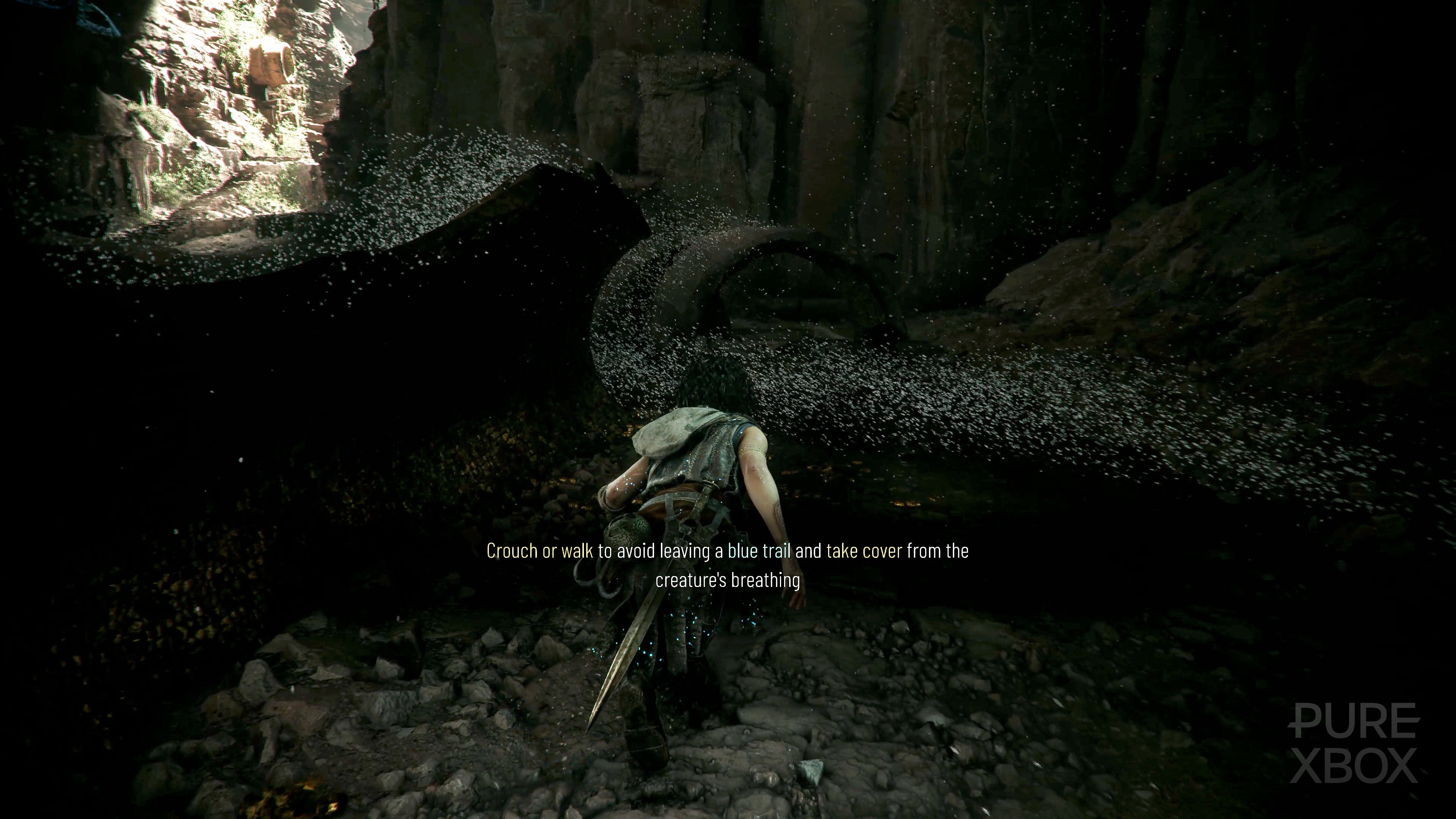
As you move through certain areas, particles in the air turn blue, leaving behind a trail if you move too quickly. The big beast (that I refuse to spoil) can track these particles at blistering speed, so keeping calm and sticking close to light sources becomes the only way to survive.
During these stellar set-piece encounters, amongst bones and decay, you’ll need to hide behind walls, pillars, and anything you can find. Although the creature can’t see Sophia, it can sniff her out, pausing to inhale the particles around it. Sometimes, however, you’ll have no other choice but to leg it leaving behind a big blue trail. Sprinting from light to light to escape a gruesome end makes for some truly memorable, heart-in-mouth chase sequences.
Each chapter takes you through the trials areas, hopping between eras as every environment looks and feels unique. You begin at the steps of a grand temple, climbing trees and ruins to find your way inside. Later, you descend into the belly of the island, surrounded by bones and infested with the Macula, hunted by the new monster. In other words, both Sophia and Theseus go through a lot of rather horrid stuff.
My main gripe is a minor one, and it’s with how the story unfolds. It’s end game stuff, so I won’t detail it here, but what I will say is if you’ve played A Plague Tale: Requiem, like I had, having that context slightly subdues Resonance’s climax. It still hits hard, and I even found myself tearing up a wee bit at the end, but by that point I’d pieced everything together and was waiting for the wonderfully acted cast to catch up.
As for performance, I played through the game on Xbox Series X in Quality mode. There’s also a 60FPS Performance option if you’d prefer, but I opted for the environments, characters, and lighting to look their best. Other than the occasional odd behaviour from my AI companion, Leni, who got stuck in places, the game ran perfectly.
Conclusion
Resonance: A Plague Tale Legacy is the most confident game in the series in almost every way. It takes the foundations laid by its predecessors and evolves the IP into a fantastic action-adventure. Its story doesn’t carry the same sense of mystery, and you may piece together where it‘s heading, but even so, it’s still an unsettling and deeply emotive tale.
Amicia may have been the one to put A Plague Tale on the map, but Sophia’s ferocious use of her blade and dagger makes her direct approach to human-shaped problem-solving feel like a triumphant step forward for Asobo.


Comments 23
IGN gave it a 6 so that instantly means it’ll be a 9 for me. Anyway, great review here and can’t wait to play it tomorrow!
Delighted to see this, looking forward to playing it!
Sounds awesome! There are so many games out right now. I’m making my way through Mortal Shell 2, close to the end, and tomorrow this game comes out along with Star Wars Zero Company which I preordered. In a week or two Onimusha and Blood of the Dawnwalker almost back to back. Good god.
To be truthful, I never finished the first two games. I found the stealth and focus on avoiding combat kinda boring and the story wasn't enough to keep me going. This one however has me more interested with it being more action oriented. We shall see tomorrow.
@Kraven Man, that's a heck of a lineup...
Too many great looking games, so little time 😵
Oh hell yeah!
The first teaser trailer hooked me for reasons I’ll never be able to explain. I tried to go back and play the other two as “homework” but only finished Innocence. This review makes me feel like I’m in a perfect spot - can’t wait until Friday!
I don't want to read too much about this and risk spoilers but I'm really glad it's scored well here. Very much a day 1 game for me as I loved the previous 2 games.
@LaurenceJ1987 I've tried to keep it as spoiler free as I could, but I hope you enjoy the game!
@awp69 I'm surprised to see it scoring low in places. Genuinely loved it.
@HelloCraigo I very much trust your reviews and scores, so I'm sure I will.
@LaurenceJ1987 n'aw well that's a lovely thing to say - Thank you!
Thanks for the review Craig, I'm looking forward to this more now
@Raffles you're welcome! Would love to know what you think!
@HelloCraigo Me too! Looks like the “good” reviews are outweighing the “bad” ones. Still at 85 with 61 reviews at OpenCritic. That’s a great average!
It's nice to have more reviews here. The third part of the series seems to be quite the improvement. Another excellent day one addition to Game Pass!
@HelloCraigo I'm a big fan of the first 2 games, and I think they're quite underrated. Well, they were well received and sold well enough right? But still, they don't seem to get talked about much, or received loads of accolades etc.
But I loved them. I much preferred them to God of War on the PS5 for example, even though that game is so much more hyped and highly regarded.
I have fond memories of the first game too, as I played that just a few days after getting my SeriesX.
Anyway, I was a bit apprehensive about this new one, as you noted it seems VERY different to the first 2, and I really like the original characters. But your good review did alleviate my concerns, and I'm now way more pumped for it
Cheers.
Thanks for writing this up Craigo. I may have to go ahead and buy this one. Sounds like it has an unlocked frame rate if you have a 120hz display and Xbox has the highest FPS, even agains the PS5 pro. Pretty nuts!
The actor who played the part of Sophia is on Twitch, Anna Demetriou. She's one of the warmest, kindest, funniest humans you'll ever meet. Check her out.
@awp69 They're a strange bunch IGN aren't they ?
@awp69 IGN = IGNorant
So played the first chapter. Not a great deal of game play in there so cannot come to a full conclusion yet but I am not loving the combat so far. That window for the parry is very tight
Edit: Played a little more this morning and it is all coming together now
So refreshing to read a completely balanced and unbiased review from someone who obviously has a genuine love of video games. I was a big fan of first 2 plague tales and resonance although different didnt disappoint on any levels. Great game , great review and i will be looking out for your reviews in future. Thanks Craig
I just finished this game, so I can see how both a 6 & 9 review are both valid, especially depending on how far into the game you get. Two thirds through the game I was absolutely loving the game, a solid 9. I didn't want to stop playing it. So many things well done, good story, combat, puzzles, visuals, sound... Then towards the latter end of the game, the mix of content that made the first half interesting started to feel one dimensional with the constant sneaking & chase sequences were getting so tedious & frustrating. The further I got in the game the less I liked it. In fact it reached a point I didn't want to play it anymore. At one point Sophia says "Oh God, let it end." Those exact thoughts were going through my mind. I only completed the game out of need to see the end after coming so far into the game, rather than wanting to complete the game because I was enjoying the game.
To me a 9 or higher is a game that I enjoyed so much I'm sad to finish it, plus of course wanting to replay it. I can say neither of those are true. So definitely not a 9 for me. More like a 7 for me. Glad it came to game pass because this has zero replay value for me.
Show Comments
Leave A Comment
Hold on there, you need to login to post a comment...